CIL-1 — The Chromatic Internet Layer
A Post-Symbolic Architecture for Web Interaction
Ambient Era Canon · Web Volume I
CIL-1 introduces the world’s first post-symbolic architecture for web interaction.
It replaces query-based navigation, ranking, textual relevance, infinite scroll,
and extractive attention models with a chromatic state-entry layer,
ΔR-based resonance interpretation, and Resonant Meaning Fields (RMFs) grounded
in the Ambient OS sequence (AP₁ → AP₂ → TP₁).
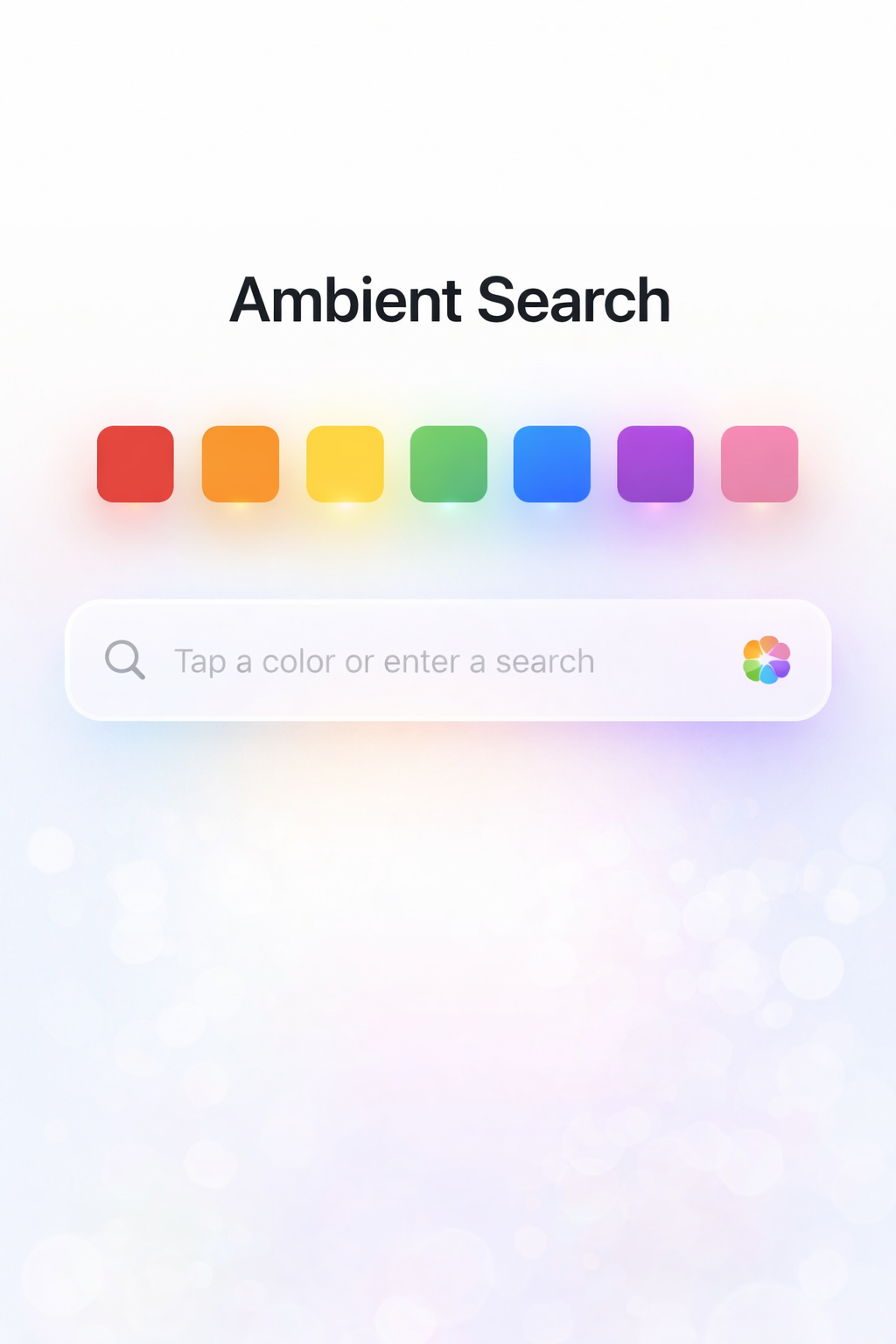
Instead of typing or filtering, users begin with a
Chromatic Entry State — eight semantic operators
(Red, Orange, Yellow, Green, Blue, Purple, Pink, Gray)
that encode intention prior to language. Meaning unfolds as fields,
not symbolic results.
Summary
CIL-1 formalizes:
- a non-symbolic access layer for the web
- a chromatic semantic grammar (AP₁)
- a relational reasoning layer (AP₂)
- a ΔR-driven thermodynamic interpretive engine
- Resonant Meaning Fields (RMFs) as successor to search results
- a non-agentic role for AI within resonance space
- a post-extractive, humane internet architecture
CIL-1 marks the beginning of the
Second Birth of the Internet — a transition from
symbolic compression to ambient decompression,
from attention extraction to thermodynamic coherence,
and from queries to chromatic states.
Eissens, R. (2026). CIL-1 — The Chromatic Internet Layer: A Post-Symbolic Architecture for Web Interaction (1.0). Zenodo.
https://doi.org/10.5281/zenodo.18731073